
The International Booker Prize 10th Anniversary celebration
We went to the International Booker Prize’s 10th-anniversary celebration on the 8th of May at the London South Bank Centre. Here’s what we experienced, thought, and left with.
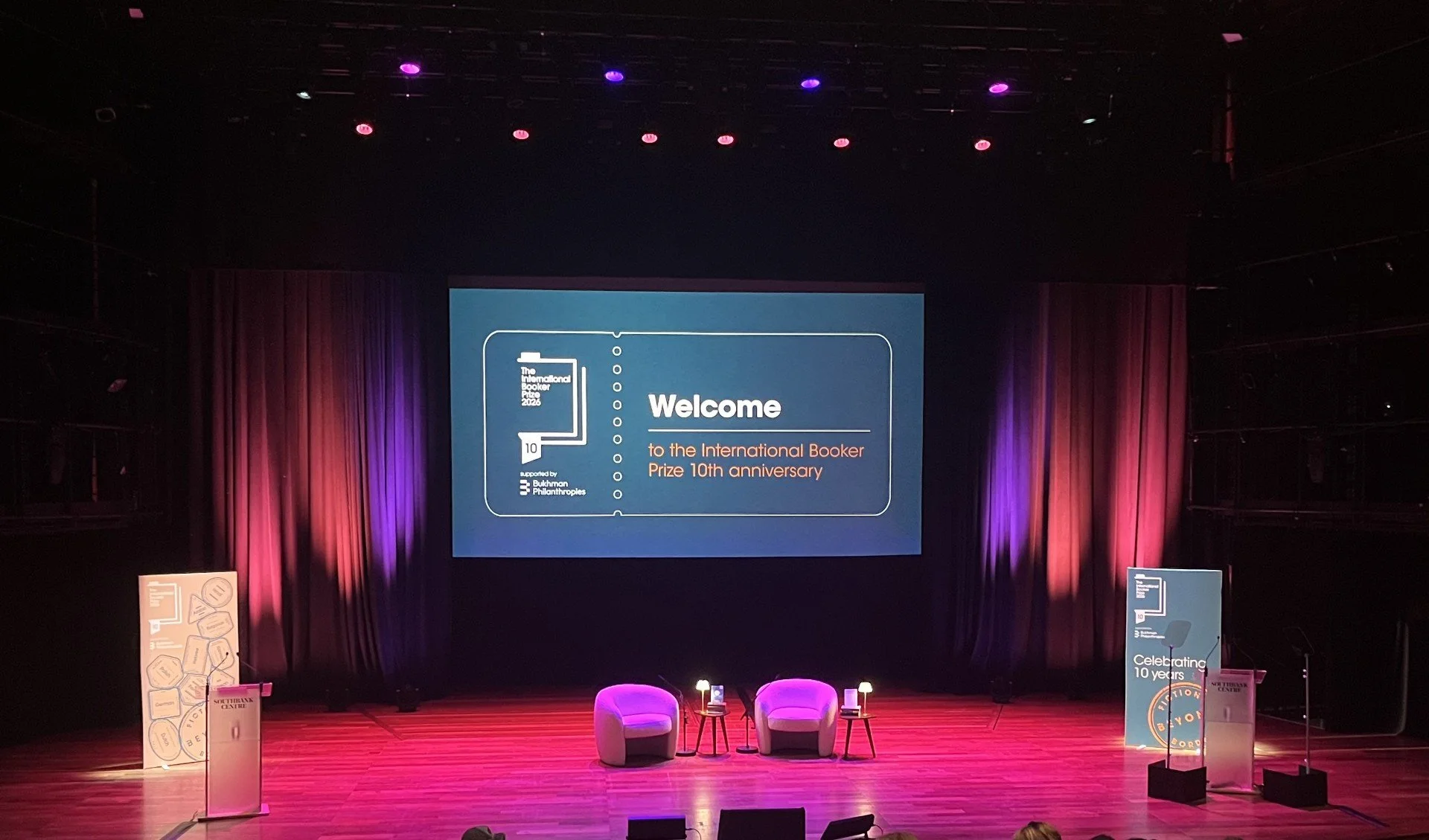
Image courtesy of Molly Newsam
The event marks ten years of the award, highlighting international literature translated from a native language into English. The other difference from the Booker Prize is that the International Booker Prize celebrates the author and translator of the work equally, splitting the £50,000 prize between them.
Stalls lined the outside of the Hall, presenting a plethora of titles, all past winners or nominees of the Prize, and available for attendees to purchase. Ticket-holders left the stands with no fewer than four new reads (myself included!) The interior buzzed with anticipation, for the speakers, and stars. Casual and engaging events such as this grant power to the written (and, in this case, spoken) word by drawing focus to the motivation behind it rather than to a perceived social focus. And yes, it was noticeable!
The evening started with a talk from Gaby Wood, Journalist, author, literary critic, and the Chief Executive of the Booker Prize Foundation. She highlighted the diversity of the original languages that formerly won: Hindi, Arabic, Bulgarian, Kannada, Hebrew, Korean, French, Polish, German, and Dutch. The award truly embodies the words ‘Fiction beyond borders’.
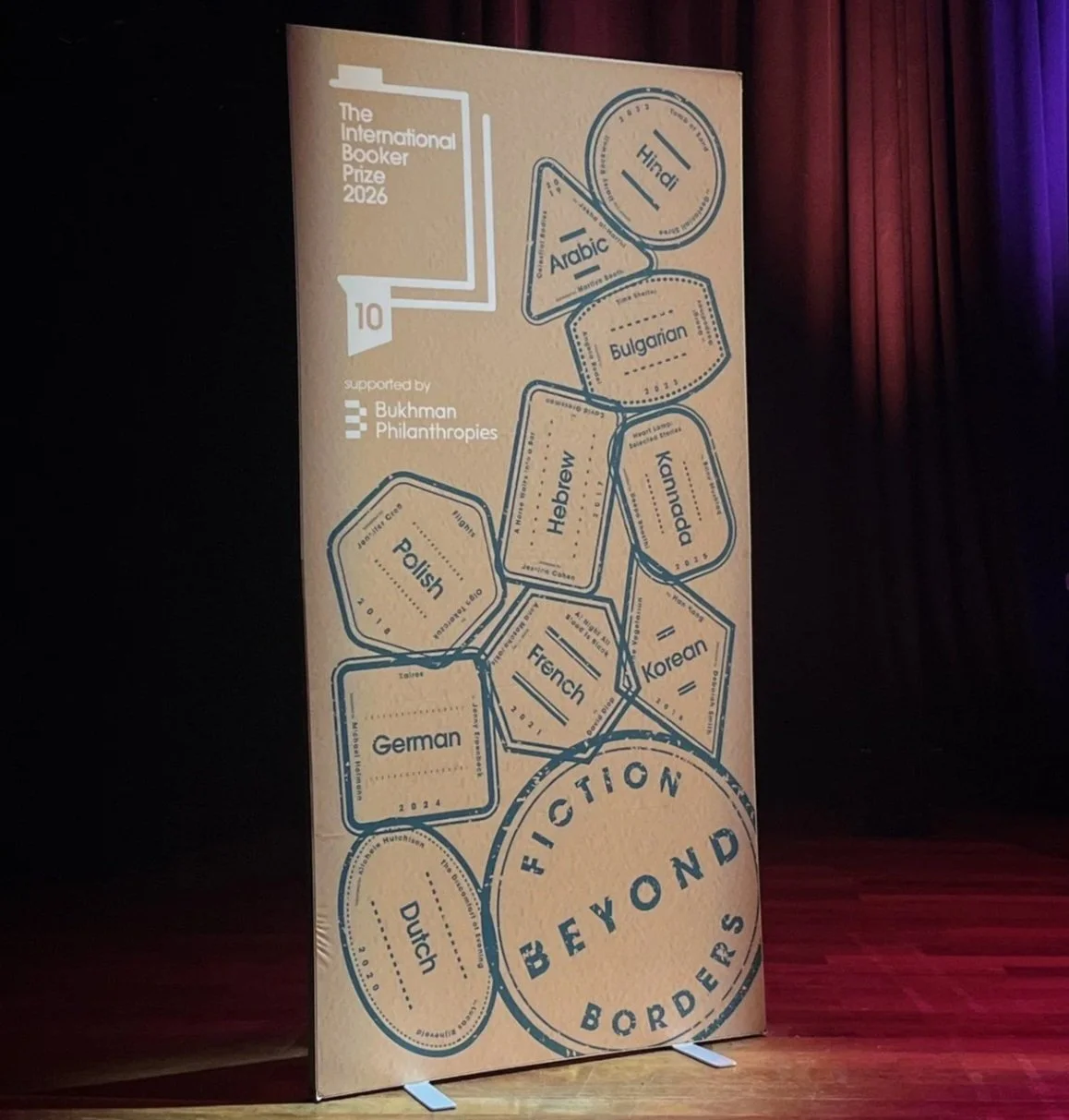
Image courtesy of Molly Newsam
A speech from Service95 Book club founder Dua Lipa kicked off the evening. She spoke passionately about her impact on new and young readers, and her drive to explore international titles through her book club, naming and referencing:
My brilliant friend by Elena Ferrante
Drive your plow over the bones of the dead by Olga Tokarczuk
Still born by Guadalupe Nettel
Small boat by Vincent Delecroix
The unbearable likeness of being by Milan Kundera
Norwegian wood by Haruki Murakami
One hundred years of solitude by Gabriel Garcia Marquez
She who remains by Rene Karabash
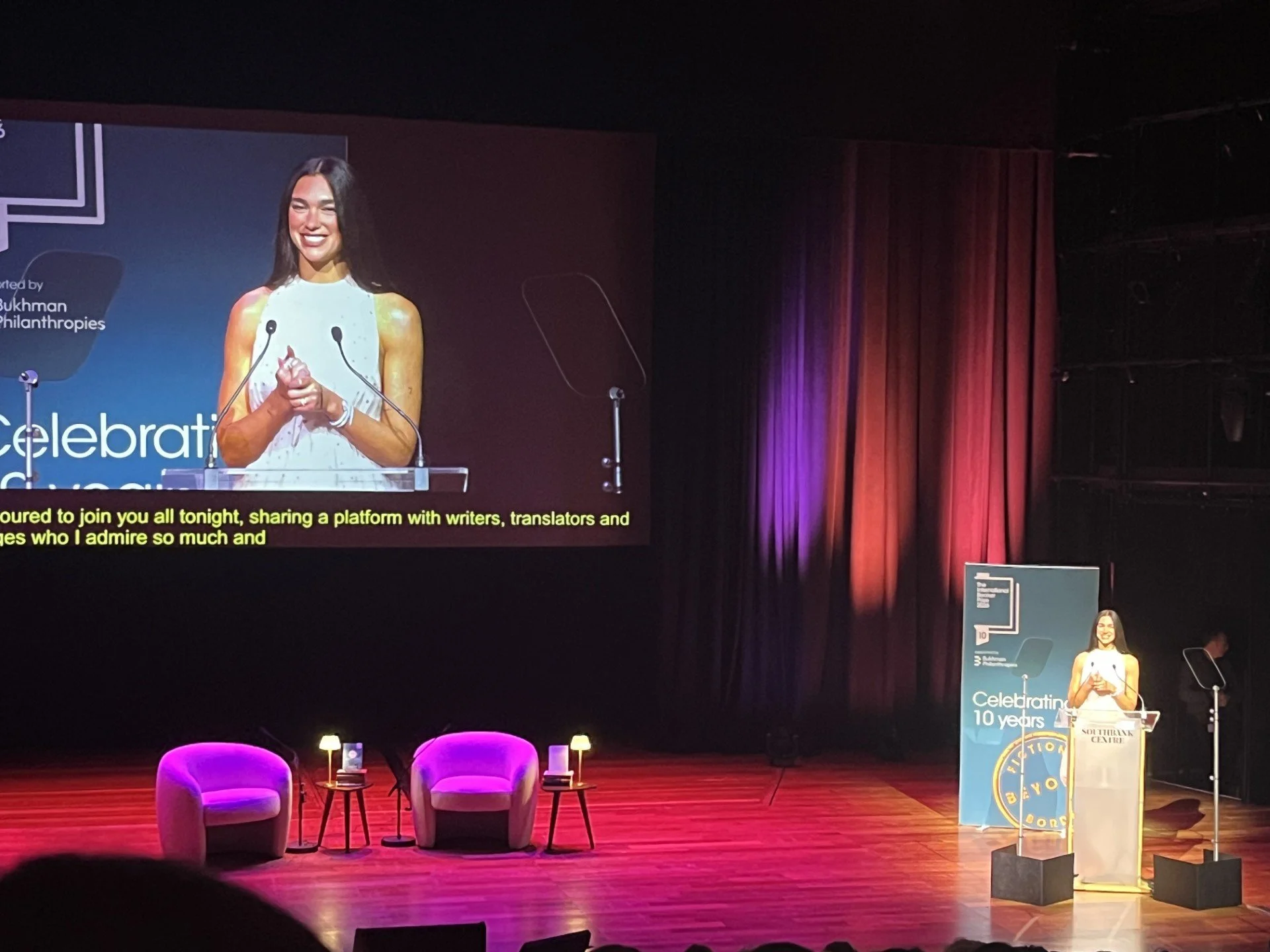
Image courtesy of Molly Newsam
Formerly nominated authors and translators took to the stage in the Queen Elizabeth Hall, discussing the necessity of translators in the present day, the importance and controversies of selective translation, starting with Deepa Bhasthi, the 2025 International Booker winner for Heart Lamp and Daniel Hahn, multi-nominated translator and 2017 Judge. Together they delved into the complications of translation, the active decision not to translate key cultural words from Kannada to English, and the overshadowing and latent imperialism of the anglicised world upon translation, and the literary and publication world.
The second panel was spoken in French and consisted of David Diop, winner of the 2021 International Booker Prize for his novel At Night All Blood Is Black (Frère d'âme) and Olivette Otele FRHistS FLSW, who is a historian and distinguished research professor of the Legacies and Memory of Slavery at SOAS University of London. Together, they gave a refreshing perspective on literacy and the global impact that colonisation has had upon published works, and the spreading of language through colonial states. Whilst a large proportion of the audience could only look at the translation on screen, they could fill the room with laughter and provoke emotion just as well, proving that language never truly is a barrier!
Gaby Wood returned for the third panel discussion and was joined by Laurence Laluyaux, Agent & head of RCW International, and Jacques Testard, Founder & Publisher of Fitzcarraldo Editions. One quote stuck with me from this talk: ‘ There is something so innately human about translation’. It reminded me of the acceptance speech by director Bong Joon-ho while accepting a Golden Globe award for his film Parasite. "Once you overcome the one-inch-tall barrier of subtitles, you will be introduced to so many more amazing films." The thought I left with was that the only real obstacle to accessing international works of art and literature is one’s own reluctance to engage with them because we may not understand the untranslated original work; would I call this lazy, unwilling, or unintentional discrimination? Hopefully none!
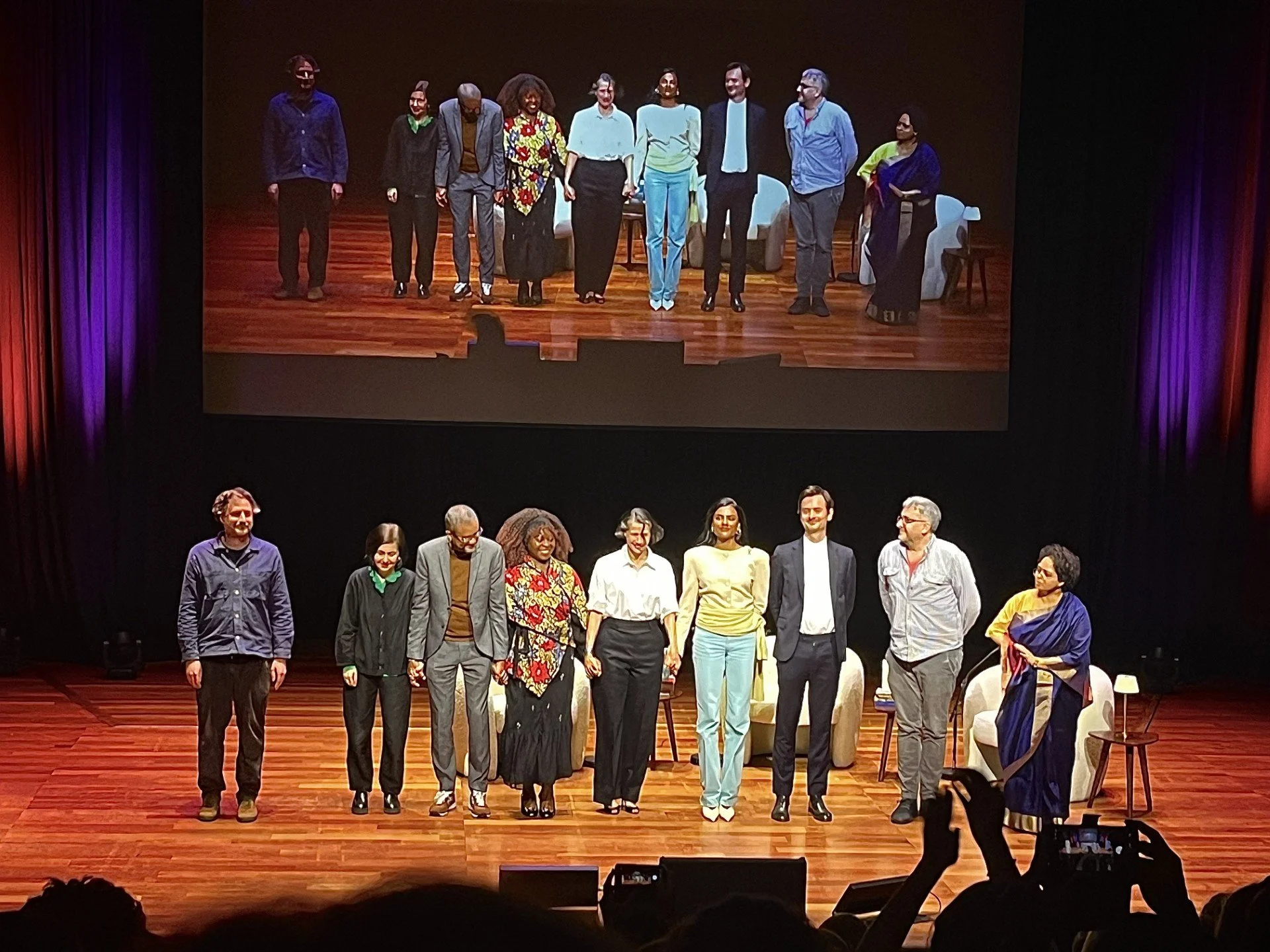
Image courtesy of Molly Newsam
The evening concluded with a reading by Simone Ashley, from the 2016 International Booker Prize, and the 2024 Nobel Prize in Literature winner, ‘The Vegetarian’ by Han Kang, translated by Deborah Smith. It has also been translated into thirty-five languages since publication. The short section read incited enough emotion for me to purchase it in the stalls afterwards!
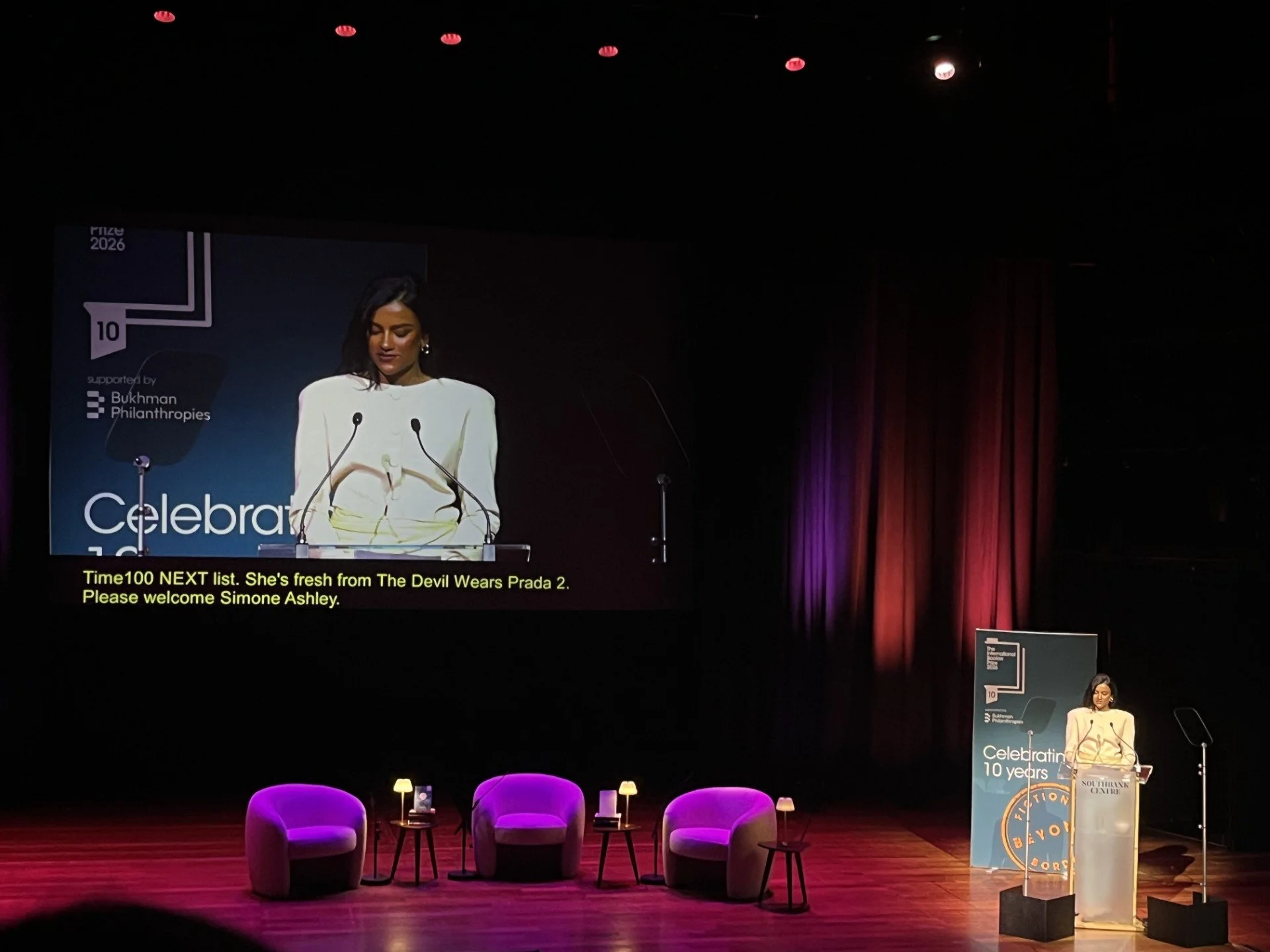
Image courtesy of Molly Newsam
This event was a riveting and insightful approach, encouraging everyone to engage with internationally written literature. The speakers introduced exciting questions to ponder about our own curiosity, willingness, and familiarity with the English publication.
The winner of the 2026 prize will be announced on the 19th of May. The shortlist of nominees is:
The Nights Are Quiet in Tehran by Shida Bazyar, translated from German by Ruth Martin
She Who Remains byRene Karabash, translated from Bulgarian by Izidora Angel
The Director by Daniel Kehlmann, translated from German by Ross Benjamin
On Earth As It Is Beneath by Ana Paula Maia, translated from Portuguese by Padma Viswanathan
The Witch by Marie NDiaye, translated from French by Jordan Stump
Taiwan Travelogue by Yáng Shuāng-zǐ, translated from Mandarin Chinese by Lin King
Here you can find the full list of nominees and winners of the International Booker Prize: https://thebookerprizes.com/the-booker-library/features/full-list-of-international-booker-prize-winners-shortlisted-authors-and-their-books